Jewelry photography guide
How to Photograph Earrings: Lighting, Support and Symmetry
Earrings bring a problem rings do not have: there are two of them, and they have to look like a pair. Small differences in angle, height or lighting that would pass on a single piece become obvious when two identical objects sit side by side. Add posts, hooks and backs that have to be either hidden or shown cleanly, and the fact that most earrings are designed to hang rather than stand, and a simple pair of studs becomes a careful piece of set-building. This guide covers positioning, support, lighting and the retouching that finishes the pair.
Deciding how the pair will sit
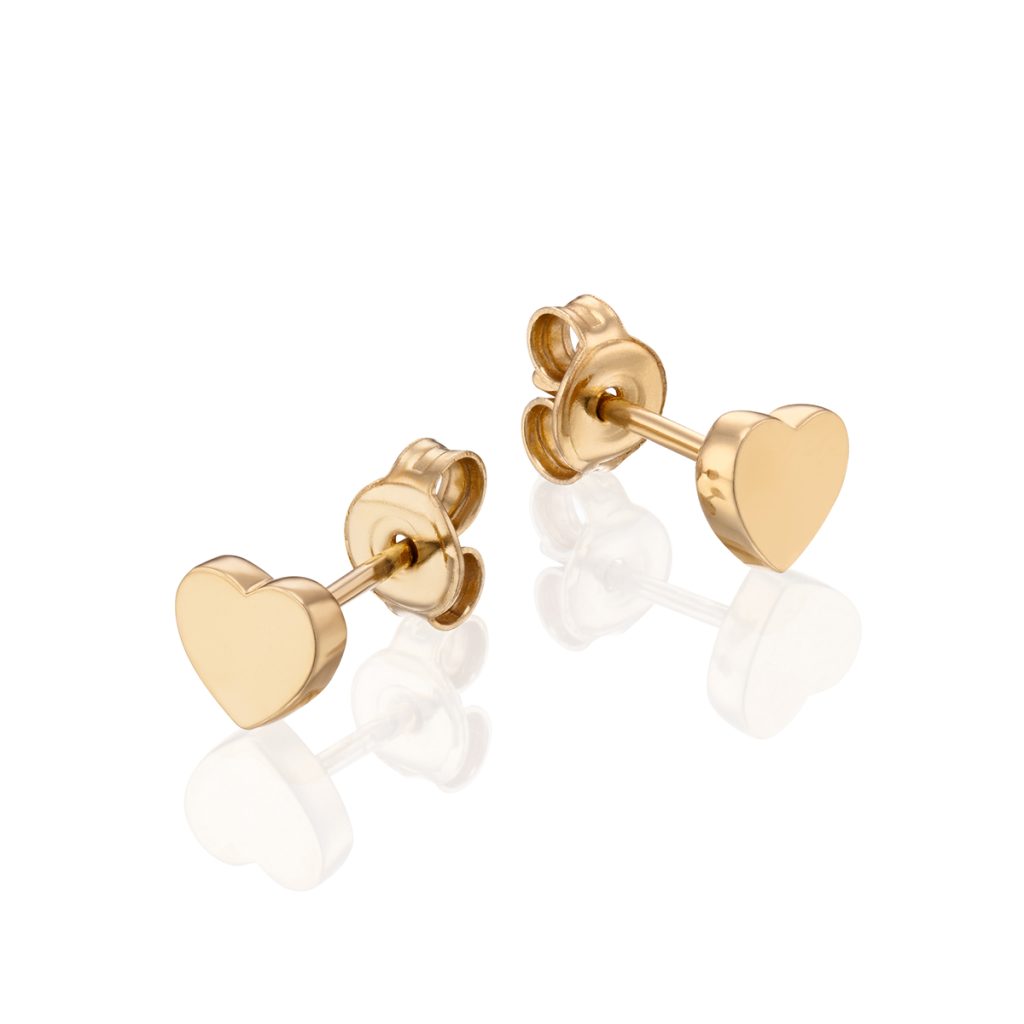
Before any light is placed, decide the view. Studs are usually shown from the front, standing or lying with the post hidden behind the piece, or at an angle that shows the post and back deliberately. Drop and hoop earrings are usually shown hanging, which means they need something to hang from that will not appear in the final image. Both pieces must share the same view: same tilt, same height, same distance from the camera, so the lens sees them at the same size.
A useful habit is to position one earring completely, light it, and only then place the second to match it. Matching two moving targets at once is slower than matching one to a finished reference.
Holding earrings in position
Professional earring images almost never show their supports, which means the supports are there and removed later, or hidden by the piece itself. Studs can stand on a tiny ball of museum wax or putty on the back of the post. Hanging earrings are suspended from a thin wire or thread fixed to a stand above the set, or clipped from behind to a small rod that the piece covers. Flat-lying earrings sit on the surface with the post pressed into a small hole or a piece of putty under the piece.
Every support leaves something to retouch: a wire crossing the background, a ball of putty in the reflection, a clip edge behind a hook. Keeping the support as small and as hidden as possible on set saves far more time than the minutes it costs, because retouching a wire across a textured background is slow and an untidy result shows.
Lighting a pair
Earrings mix every surface in jewelry: flat polished faces that act as mirrors, curved edges that show gradients, stones that need hard light and sometimes pearls that need soft light. The lighting approach is the same as for any piece, described in the guide on lighting: a large diffused source for the metal, black and white cards to decide which surfaces go dark and bright, and a small hard source for any stones.
The pair introduces one extra rule: the lighting must be symmetrical across the two pieces, or deliberately not. A single diffuser above the set lights both earrings the same way as long as they sit at the same distance from it. A side light, by contrast, makes the near earring brighter than the far one, which can be a choice for an advertising image but is a mistake in a catalog pair. Flat faces are the hardest part: a flat polished surface reflects one thing, so the card or panel it reflects has to be exactly the tone you want that face to be.
Focus and depth
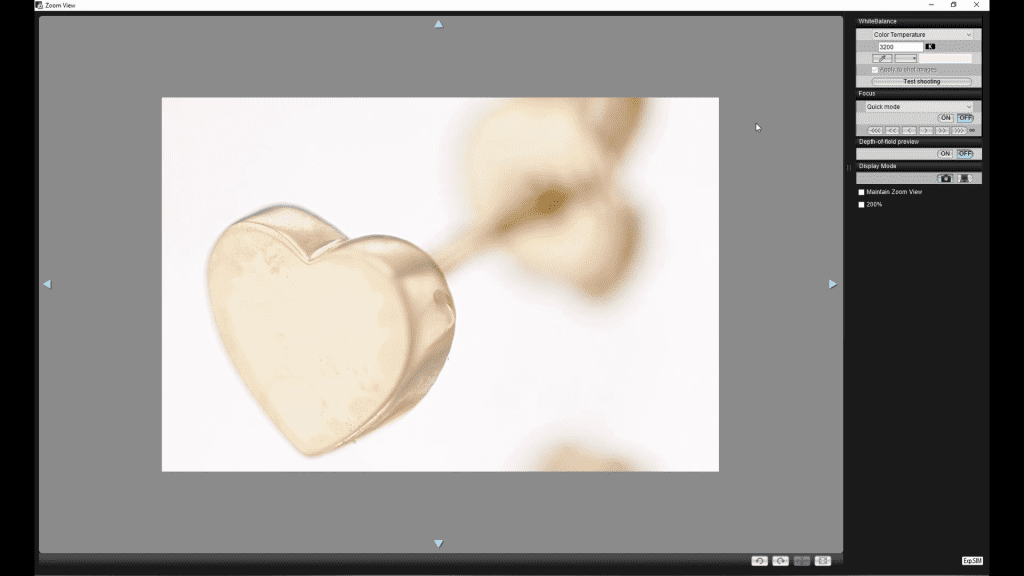
A pair photographed from the front sits roughly in one plane, so a single sharp frame is often possible at a moderate aperture. Angled views and hanging drops have depth, and at macro magnification the far earring or the far edge of a drop goes soft. The answer is the same as for rings: a focus stack, several frames at different focus distances merged into one sharp image. The free sample lesson from the course shows the technique on a real piece.
Retouching the pair
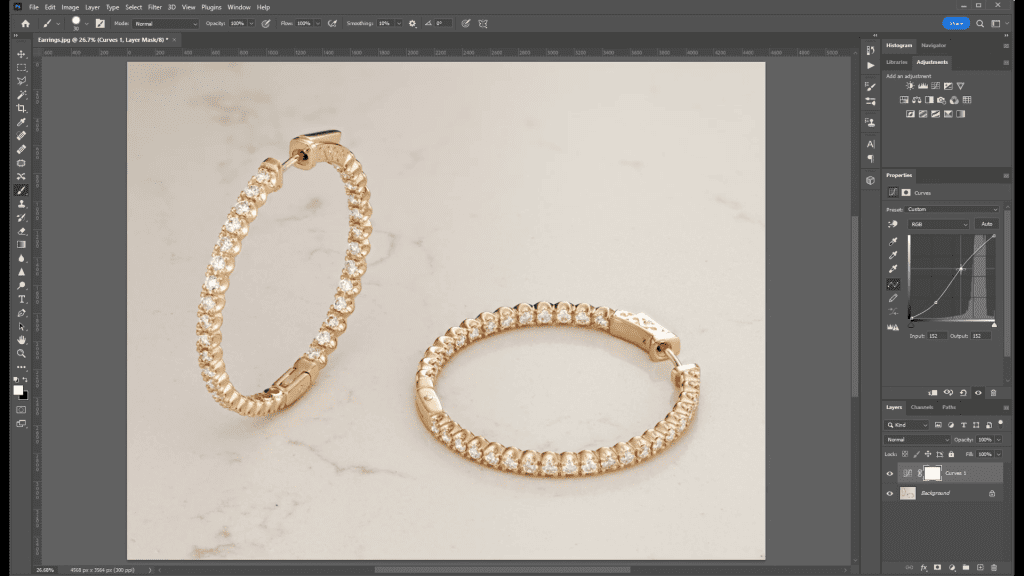
The retouching chapter of the course dedicates two lessons to earrings. Retouching a pair has tasks of its own. Supports are removed. The two pieces are checked against each other for size and alignment and corrected if the set was not perfect. Small differences in brightness between the two are evened out so they read as one pair. Reflections of the set in flat faces are cleaned. Finally the pair is placed on its final background, which for e-commerce is usually pure white with a soft shadow or reflection, and for advertising can be anything the brief asks for.
Common problems
- The two earrings are different sizes in the frame: one is closer to the lens; move it back until both measure the same on the tethered screen.
- A flat face shows the camera or a dark window: adjust the angle of the piece or the card it reflects, not the light.
- The hanging earring swings during the capture: wait for it to settle, lengthen the exposure gap, and keep air movement away from the set.
- Posts and backs look different on the two pieces: match the rotation of the post exactly; it is visible even when it should not be.
- Retouching the support left a smear on the background: shoot a clean background frame with the same lighting and use it as a source.
See earrings photographed and retouched
Mastering Jewelry Photography includes a 10-minute practical lesson on photographing earrings and two lessons on earring retouching, inside a 49-lesson course that covers the full workflow: lenses, camera, lighting theory, grip, tethered shooting, focus stacking, the practical photography of rings, bracelets, earrings and necklaces, and the complete Photoshop retouching of each piece. One-time payment of $99, lifetime access.
Related guides
- How to Photograph Jewelry: Professional Lighting Techniques: the principles behind every setup
- Focus Stacking for Jewelry Photography: Full Guide: keeping a whole piece sharp from front to back
- Jewelry Retouching in Photoshop: A Professional Workflow: from selections to sharpening
- How to Photograph Rings: lighting, focus and composition
About the author
Ivan Moshe is a commercial photographer and high-end retoucher who has photographed products for the advertising industry for more than 15 years, from his studio in Tel Aviv’s Diamond District. He was selected for Lürzer’s Archive 200 Best Ad Photographers Worldwide in 2021/22 and 2023/24, and he teaches Mastering Jewelry Photography, the online course these guides are drawn from.